The Georgia Seed Development Commission is the agency responsible
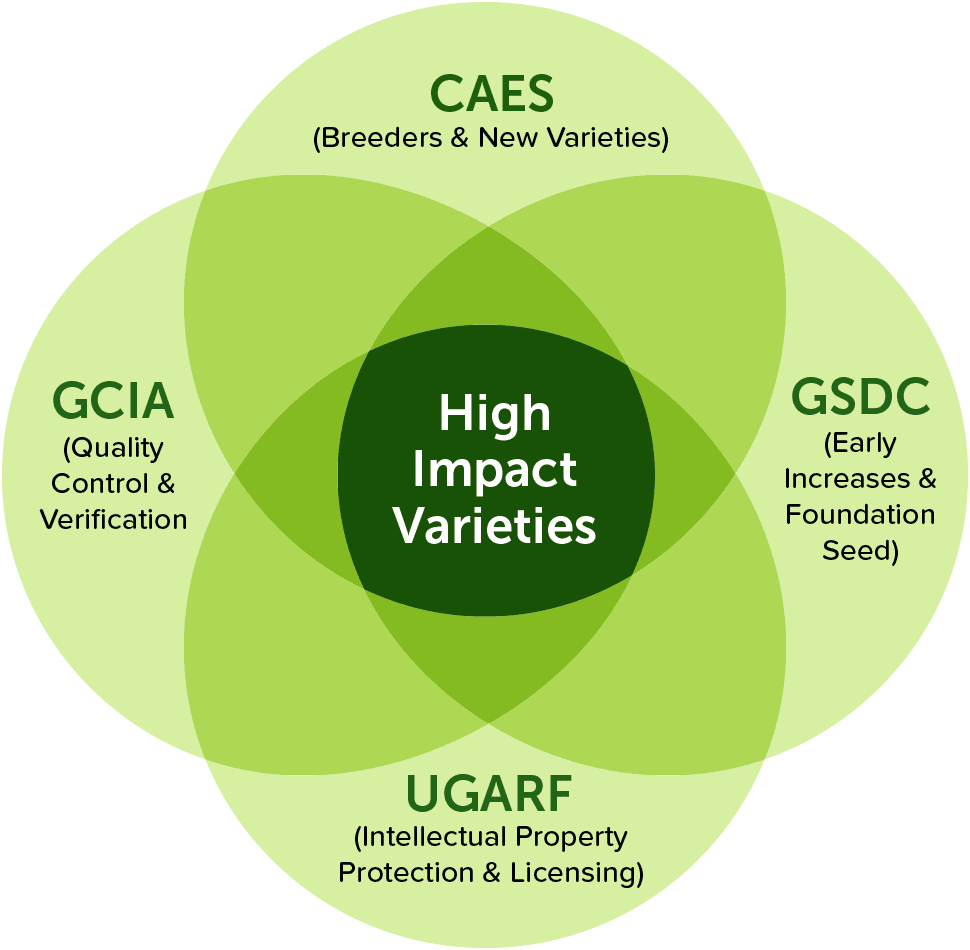
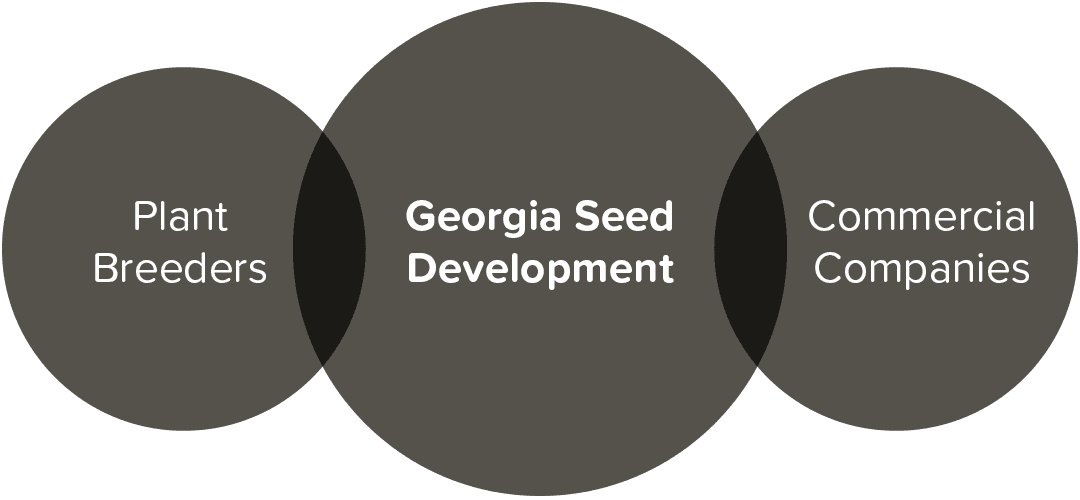
for foundation plant material production in Georgia. It was created by legislative action in 1959 and is designated as the “recipient of breeder seed from University of Georgia Agricultural Experiment Stations.” The Commission is administratively assigned to the Georgia Department of Agriculture and has an 11 member board.The Seed Commission has an active seed production program for most row crops grown in the state including peanuts, soybeans, small grains, cowpeas, bahiagrass, cotton, fescue, lupine, canola, alfalfa and millets. In addition, the Commission maintains foundation material of vegetatively propagated turfgrass and |
horticultural cultivars developed by the University of Georgia and USDA/ARS. In 1997 the Commission entered into a cooperative agreement with the University of Georgia Research Foundation to manage licensing and royalty collection for University and USDA/ARS developed cultivars. The Commission also establishes and coordinates marketing associations for these University and USDA cultivars. The Commission is a non-profit, self-supporting organization and derives operating funds from seed, vegetative plant material sales and a percentage of royalty collections. It operates two facilities, one in Athens and the other in Plains. The Athens facility is the administrative office and includes bulk storage, warehousing and a full array of conditioning equipment for |
soybeans, small grains and other crops. The Plains facility houses the peanut program with equipment for drying, storage, shelling and treating seed peanuts. An air screen machine with flat bag storage is also located in Plains to condition and store small grains and soybeans. The Commission staff cooperates with USDA and UGA faculty in supporting and facilitating various research projects. Since 1990, the Commission has directly provided over two million dollars to the University and USDA in support of cultivar development. The GSDC will continue to provide leadership and economic support for new business opportunities in helping to keep agriculture as Georgia’s number one industry. |